
Recipes
Dubai Chocolate Modak Recipe: The Viral Pistachio Kunafa Twist on a Ganpati Classic
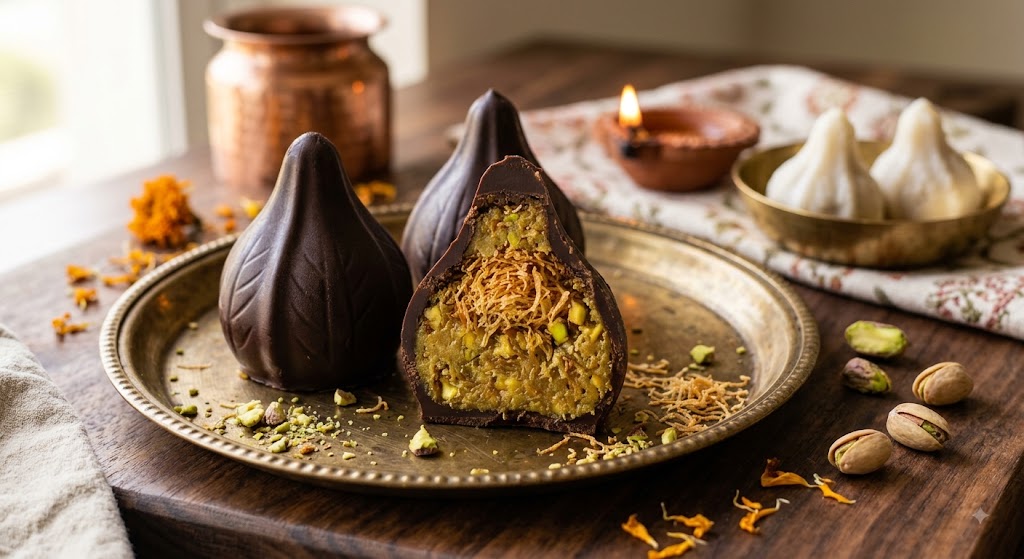
There’s a version of this recipe that would make my grandmother raise an eyebrow, and I say that with real affection. This dubai chocolate modak recipe takes the pistachio-and-crispy-kunafa flavor that’s been taking over everyone’s phone screen for the last couple of years and pours it into the shape that means Ganpati has arrived. It’s not trying to replace ukadiche modak. It’s sitting right next to it on the same plate.
The first time I saw the Dubai chocolate videos everywhere, my first thought wasn’t “I need to try that.” It was “that filling would be incredible inside a modak.” I’m still not entirely sure if that’s a good instinct or just what happens when you’ve spent too many years thinking about pleating dough around fillings.
What Is a Dubai Chocolate Modak?
If you haven’t run into it yet, “Dubai chocolate” refers to a specific viral chocolate bar that started with a small chocolatier in Dubai and spread everywhere through short-form video. The signature combination is a thick pistachio filling mixed with kataifi, thin shredded pastry strands that get toasted in butter or ghee until they turn deeply golden and genuinely crunchy, all of it wrapped in a chocolate shell. The crunch against the creamy pistachio is really the whole point of the thing.
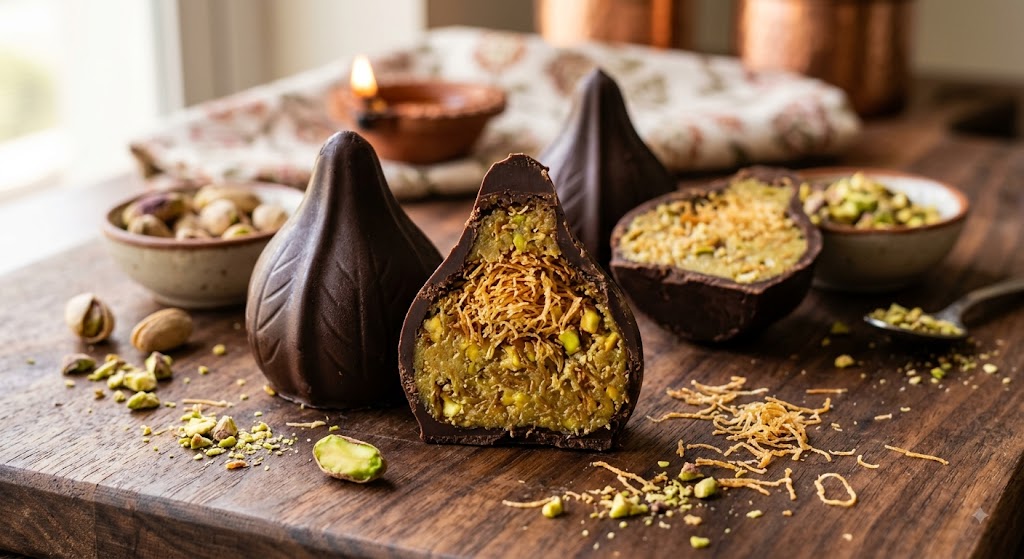
A dubai chocolate modak takes that exact filling and, instead of pouring it into a chocolate bar mold, uses a modak-shaped silicone mold instead. You get the familiar pleated, pointed modak silhouette, but bite into it and it’s chocolate shell, toasted kataifi crunch, and pistachio filling all the way through. It’s a completely different technique from the steamed rice-flour ukadiche modak, this one is a no-cook, mold-based method built entirely around melted chocolate.
Why This Fusion Actually Works, and a Word on Tradition
I want to be upfront about something. Fusion desserts around festivals can go either way. Sometimes they feel like a genuine addition to the table, and sometimes they feel like they’re standing in for the real thing instead of standing beside it. This one, I think, earns its place, and here’s why.
Modak has never been just one recipe. There’s the steamed version, the fried version, versions stuffed with mawa, versions with dry fruits. The dish has always had room for variation as long as the shape and the occasion stay intact. A chocolate shell with pistachio and crunch fits into that same tradition of variation rather than breaking from it.
That said, this is not a substitute for ukadiche modak on your Ganpati thali. Make both. Offer the traditional one first. Let this one be the thing that gets your kids, or your friends who’ve never had modak before, genuinely excited to try something from the festival table.
If you haven’t made the traditional version yet, Ukadiche Modak is the place to start, this recipe assumes you already know why the shape matters.
Dubai Chocolate Modak Recipe: Ingredients
This dubai chocolate modak recipe makes about 12 to 14 modaks, depending on your mold size.
For the chocolate shell:
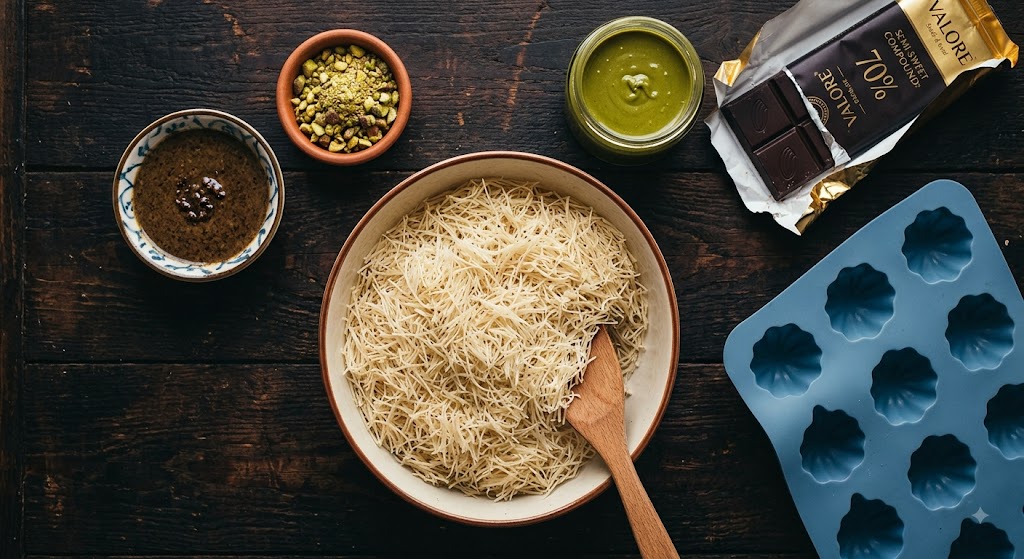
- Compound chocolate (candy melts or chocolate specifically made for molding) — 300 g, or 200 g if using couverture chocolate that you temper properly
- You’ll need this in two batches, one for the base shell, one for sealing
For the kunafa-pistachio filling:
- Kataifi pastry (shredded phyllo), finely chopped — 1 cup
- Ghee or butter — 2 tablespoons, for toasting the kataifi
- Pistachio paste or pistachio butter — ½ cup
- Tahini — 1 tablespoon (optional, but it rounds out the flavor and cuts the sweetness)
- Powdered sugar — 2 tablespoons, adjust to taste
- Crushed pistachios — 2 tablespoons, for texture and garnish
Equipment:
- Modak-shaped silicone mold
- A pastry brush or small spoon for coating the mold
- A piping bag or small spoon for filling
[If your tested batch uses different quantities, especially the chocolate amount, which depends heavily on your specific mold size, swap in your own numbers here.]
How to Toast the Kataifi for This Dubai Chocolate Modak Recipe Without It Going Soggy
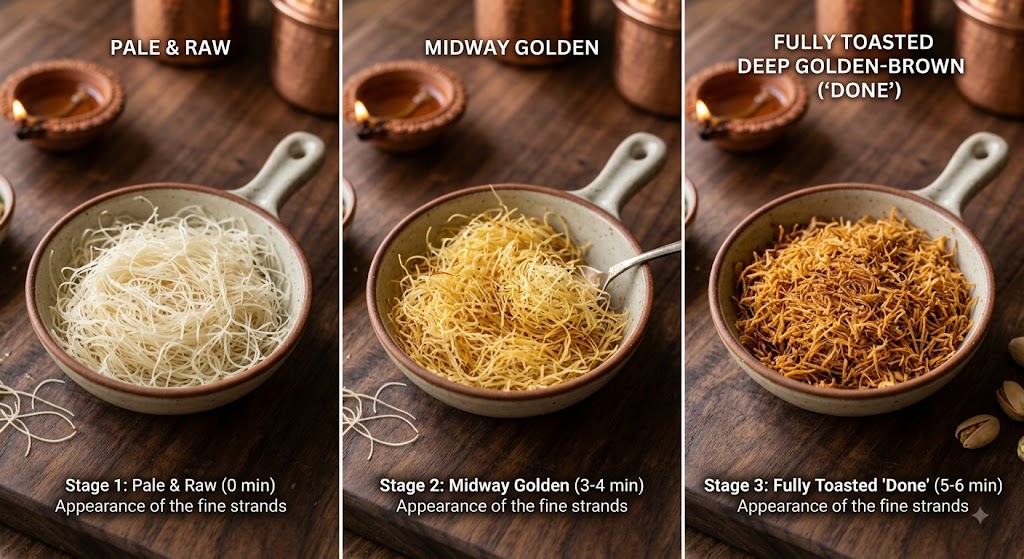
This is genuinely the step that makes or breaks this dubai chocolate modak recipe, the crunch is the entire point of a Dubai chocolate anything, and it’s also the easiest part to get wrong.
- Heat the ghee or butter in a wide pan on medium-low heat.
- Add the chopped kataifi and stir constantly, don’t walk away from this.
- Toast until it turns a deep golden brown, evenly across all the strands. This usually takes 5 to 8 minutes on a properly low heat.
- Remove from the pan immediately once it’s golden and spread it out on a plate to cool completely. Kataifi keeps cooking a little from residual heat if it’s left in the pan, so pull it earlier than you think you need to.
- Make sure it’s fully cool and crisp before mixing it into the pistachio filling. Warm kataifi mixed into filling loses its crunch fast.
The most common failure here is walking away for even thirty seconds. Kataifi goes from perfectly golden to burnt shockingly quickly because the strands are so thin. Stay at the stove for this part.
How to Make the Pistachio Filling
- In a bowl, combine the pistachio paste, tahini if using, and powdered sugar. Mix until smooth.
- Fold in the cooled, toasted kataifi gently, you want to coat it in the pistachio mixture without crushing the crunch out of it.
- Taste and adjust sweetness. Pistachio paste brands vary a lot in how sweet they already are.
- Set the filling aside at room temperature while you prepare the chocolate shell. Don’t refrigerate it yet, cold filling is harder to work with when you’re assembling.
How to Assemble This Dubai Chocolate Modak Recipe in the Mold
- Melt the chocolate. If you’re using compound chocolate, this is straightforward, melt it gently over a double boiler or in short microwave bursts, stirring between each. If you’re using couverture chocolate, you’ll want to temper it properly, untempered couverture won’t set with the right snap and can look streaky.
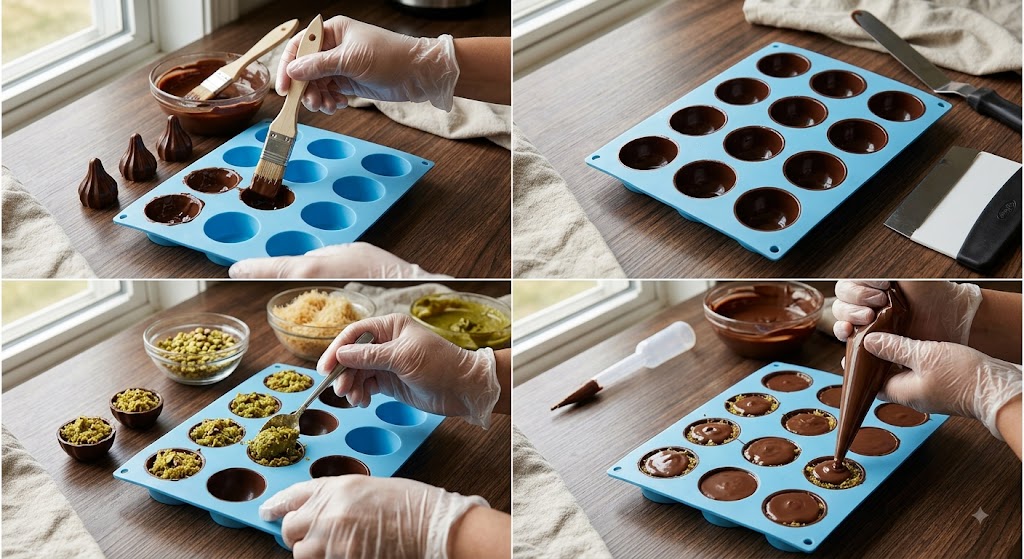
- Using a pastry brush or small spoon, coat the inside of each modak mold cavity with a layer of melted chocolate, making sure to get it into every pleat and groove. This first coat should be reasonably thick, a shell that’s too thin cracks when you unmold it.
- Chill the mold in the fridge for 5 to 10 minutes until the chocolate sets firm.
- Fill each shell with the pistachio-kataifi mixture, leaving a small gap at the top for sealing. Don’t overfill, or the seal won’t hold.
- Spoon or pipe a final layer of melted chocolate over the top of each filled cavity to seal it completely.
- Chill again until fully set, usually 15 to 20 minutes in the fridge.
- Gently flex the silicone mold to release each modak. If a shell resists, it likely needs a few more minutes in the fridge, don’t force it.
- Garnish with a few extra crushed pistachios pressed onto the top while the sealing chocolate is still slightly wet.
Common Problems in This Dubai Chocolate Modak Recipe and How to Fix Them
Chocolate looks streaky or turns white after setting (blooming): This is almost always a temperature control issue, either the chocolate was overheated while melting, or it wasn’t tempered properly if you used couverture. Compound chocolate is far more forgiving here if you’d rather skip tempering altogether.
Kataifi comes out soggy instead of crunchy: Either it wasn’t toasted long enough to get properly golden, or it sat in the pistachio filling too long before assembly, or it went into a filling that was too wet. Toast it fully, cool it completely, and assemble the same day you make the filling.
Chocolate shell sticks to the mold and won’t release: Usually means it hasn’t fully set. Give it more time in the fridge rather than trying to force it out early, a properly set shell in a good silicone mold should release cleanly with gentle flexing.
Shell cracks while unmolding: The first coat of chocolate was too thin. Don’t rush that step, a slightly thicker shell is more forgiving than a delicate one.
Filling too thick to spoon in neatly: Pistachio paste consistency varies by brand. If yours is very thick, warm it slightly, just enough to loosen it, don’t overheat it or it’ll separate.
How to Store Dubai Chocolate Modak
Keep these in an airtight container in the refrigerator, they hold up well for about a week. The kataifi will slowly lose some of its crunch over time even refrigerated, so they’re genuinely best within the first 2 to 3 days. Bring them to room temperature for about 10 minutes before serving, cold chocolate straight from the fridge mutes the flavor.
Frequently Asked Questions
Questions that come up most often about this dubai chocolate modak recipe:
You’ll need some kind of mold to get the modak shape specifically. If you don’t have one, you can make the same filling and chocolate combination as simple bark or bite-sized clusters instead, the flavor will be identical even if the shape isn’t.
Shredded phyllo dough works as a substitute, cut into thin strands and toasted the same way. Some home cooks have also used crushed vermicelli noodles (seviyan) toasted in ghee as a more accessible substitute, since it’s already common in Indian kitchens.
No, it’s there to round out the sweetness with a slightly nutty, savory note, but the recipe works fine without it if you’d rather keep the flavor purely pistachio and chocolate.
The individual steps are simple, but it does require some patience, particularly around chocolate temperature and giving each layer proper time to set. It’s a good one to make with an extra pair of hands.
Yes, they store well in the fridge for several days, which actually makes them a good make-ahead option compared to steamed modak, which is really best fresh.
Nutrition Information
Approximate values per modak for this dubai chocolate modak recipe, based on a batch of 12 to 14:
- Calories: about 150 to 180 kcal
- Carbohydrates: about 12 to 15 g
- Protein: about 3 to 4 g
- Fat: about 10 to 12 g
These are calculated estimates based on standard nutrition values for compound chocolate, pistachio paste, and kataifi, not a lab analysis of your specific batch, and they’ll shift depending on the chocolate and pistachio paste brands you use.
This one’s meant to be a little bit of fun on your festival table, not a replacement for anything. Make your ukadiche modak the way it’s always been made, and let this sit right next to it as the one that gets snapped up first by anyone who’s never had modak before.
Made these? Tag @originalsugrankitchen on Instagram, I’d love to see how the shells turned out. And if you’re building your full Ganpati spread, the Sugran Kitchen recipes page has more, starting with the Ukadiche Modak recipe this one’s named after.
More Kitchen Stories
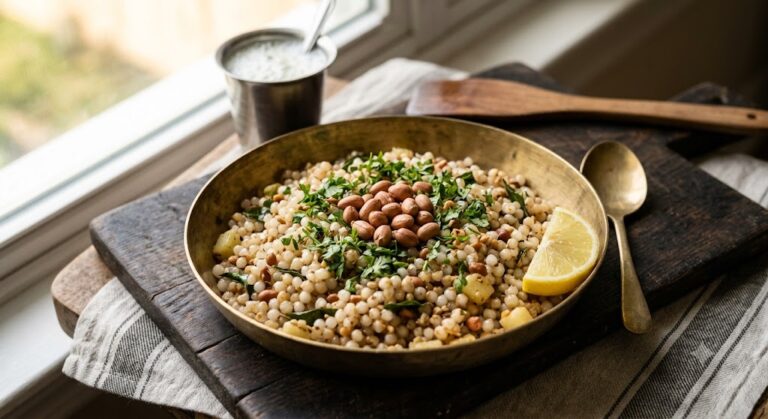
Sabudana Khichdi Recipe: How to Make Perfect, Non-Sticky Khichdi
Ask any Maharashtrian home cook what goes wrong with sabudana khichdi and you’ll get the same…

Ukadiche Modak Recipe – Authentic Maharashtrian Steamed Modak
There’s a sound in every Maharashtrian kitchen right before Ganesh Chaturthi, and it’s not the aarti…
No Comments Yet
Be the first to share your thoughts!