
Recipes
Sabudana Khichdi Recipe: How to Make Perfect, Non-Sticky Khichdi
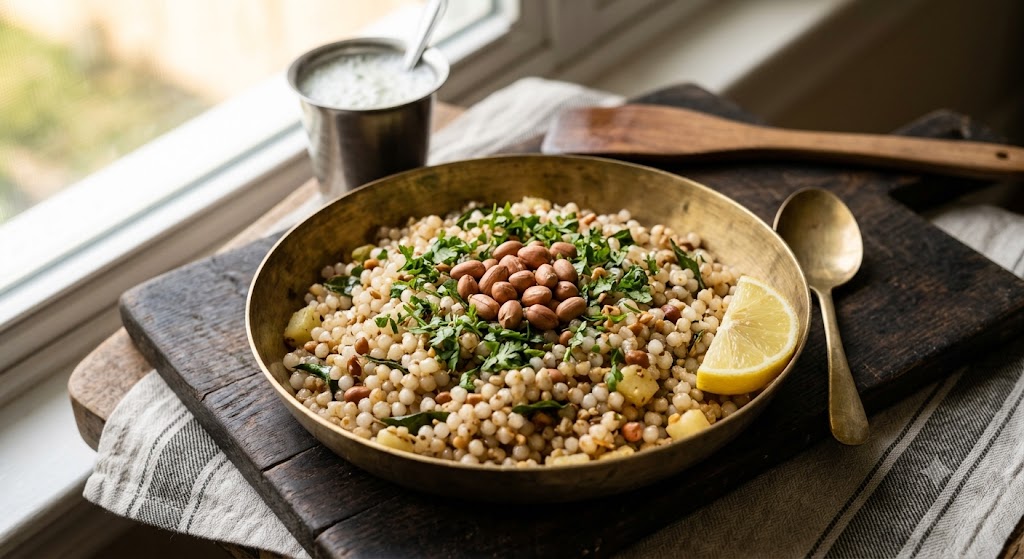
Ask any Maharashtrian home cook what goes wrong with sabudana khichdi and you’ll get the same answer almost every time: it turns into a sticky, gluey lump instead of the light, pearly, separate-grained dish it’s supposed to be. This sabudana khichdi recipe exists because of that exact problem. Once you understand what actually causes the stickiness, and it isn’t the cooking, it’s almost entirely decided before the pan even gets hot, this stops being a dish that goes wrong half the time.
And if there’s one little Maharashtrian kitchen trick that makes a real difference, it’s getting the roasted peanut powder just right, it adds flavor, texture, and helps give the khichdi that delicious, satisfying finish.
What Is Sabudana Khichdi?
Sabudana khichdi is a dish made from sabudana, small pearls of processed tapioca starch (also called sago), soaked until soft, then lightly sautéed with roasted peanuts, potato, cumin, and green chilies. It’s one of the most common dishes made during vrat, or fasting days, across Maharashtra and much of India, since it avoids grains and lentils but is filling and easy to digest.
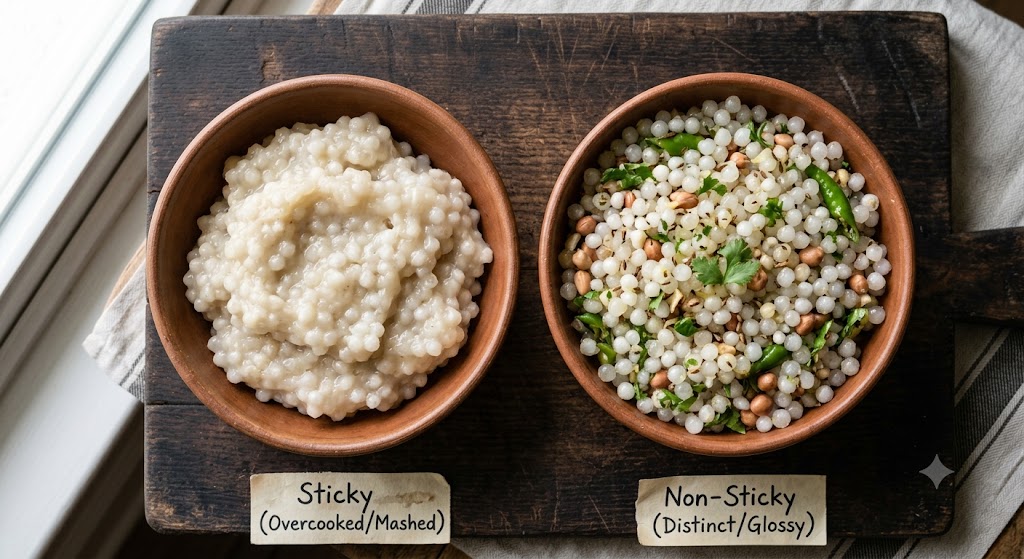
Done right, the pearls stay separate, glossy, and slightly chewy, almost like tiny pearls of tapioca in a savory dish rather than a starchy mass. Done wrong, which happens constantly, they fuse into a sticky clump. The difference between the two comes down to a handful of specific decisions made well before you turn on the stove.
Why Does My Sabudana Khichdi Become Sticky?
This is the part almost no recipe explains properly, and it’s the reason this sabudana khichdi recipe is built the way it is, around fixing this exact problem rather than around a generic ingredient list. Stickiness isn’t really a cooking mistake. It’s a soaking mistake that shows up later.
It comes down to starch, water, and heat
Sabudana is nearly pure starch. When starch granules sit in too much water and then get hit with heat, they gelatinize, swelling and bursting open until they bind together into a paste. That’s the glue you’re tasting when a batch turns out sticky. Two things control whether this happens: how much water the pearls were soaked in, and how much surface starch was still clinging to them when they went into the pan.
How much water to soak sabudana in
This is where most kitchens go wrong before they’ve even started cooking. The instinct is to cover the pearls generously, the same way you’d soak rice or lentils. Don’t. Sabudana needs to absorb water, not sit in a pool of it.
Two approaches both work, and which one suits you will depend a little on your particular batch of sabudana:
- The fixed-ratio method: use ¾ cup of water for every 1 cup of sabudana.
- The immersion method: add just enough water to sit about 1 to 1.5 inches above the pearls, no more.
Either way, the goal is the same: by the end of soaking, the pearls should have absorbed nearly all the water, leaving little to nothing standing in the bowl. If you’re draining off a noticeable puddle, there was too much water in the soak to begin with.
How long to soak sabudana for khichdi
Most sabudana needs 4 to 6 hours to soften properly at room temperature, but this genuinely varies by pearl size and brand, some batches are ready in 2 to 3 hours, others need a full overnight soak. There’s no universal timer here. What matters is checking, not clock-watching.
How to test whether sabudana is properly soaked
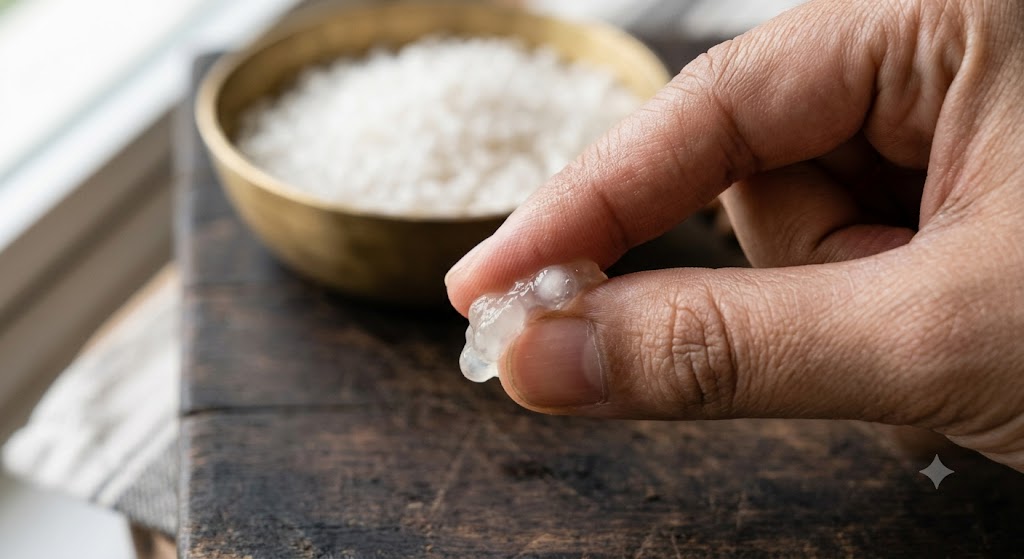
Press a few pearls between your thumb and index finger. A properly soaked pearl mashes completely, with no hard, chalky bit left in the center. If you bite into one and there’s still a firm core, it needs more time. Don’t try to fix an undercooked soak by adding water during cooking, that’s a fast route to the exact stickiness you’re trying to avoid. Instead, sprinkle a little extra water over the pearls, cover, and let them rest another 30 to 60 minutes before checking again.
Why rinsing matters as much as soaking
Before the pearls even go into their soaking water, rinse them under running water two or three times until the water runs clear. This washes off the loose surface starch dust that clings to raw sabudana. Skip this step and that surface starch is exactly what makes pearls clump together the moment they hit a hot pan, regardless of how carefully you handled the soak.
Why overcooking ruins the texture
Even a perfectly soaked batch can turn sticky if it stays on the heat too long. Sabudana only needs 3 to 5 minutes in the pan, just long enough to turn glossy and translucent. Keep cooking past that point and the same gelatinization process that ruins an over-soaked batch happens again, just triggered by heat instead of water. The moment the pearls look pearly and slightly see-through, they’re done. Stop there.
How roasted peanut powder prevents sticking
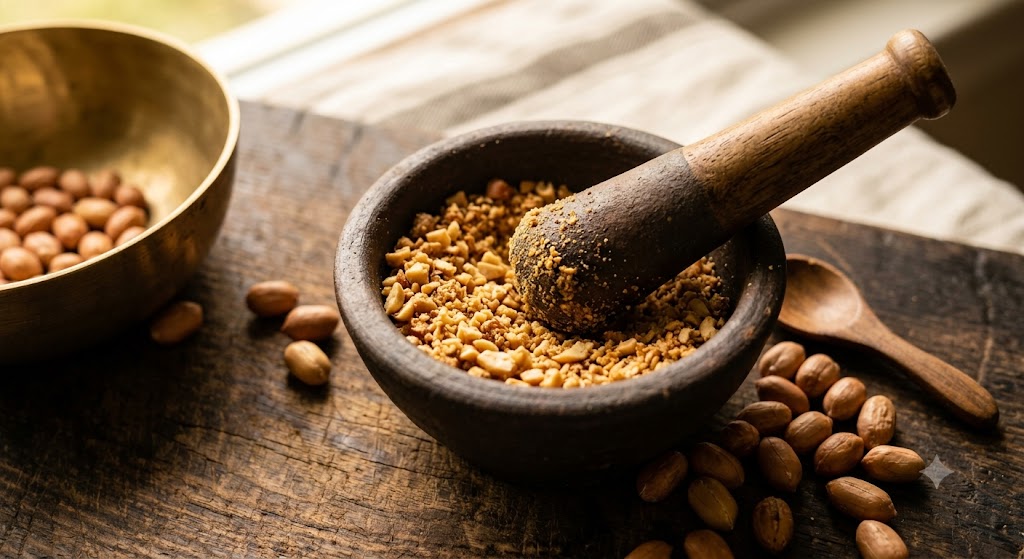
This is the traditional fix that actually works, and it’s worth not skipping even if you’re tempted to leave it out. Dry-roast raw peanuts, rub off the skins, and crush them coarsely, not into a fine powder, you want texture, not dust. Fold this through the drained, soaked pearls before they go anywhere near the pan.
The dry, oil-rich peanut crumble coats each pearl individually, soaking up any lingering surface moisture and physically keeping the grains apart from each other. It’s not just a flavor addition, it’s doing real textural work. A rough ratio that holds up well is about ½ cup of roasted peanuts for every 1 cup of sabudana.
When to add the potato
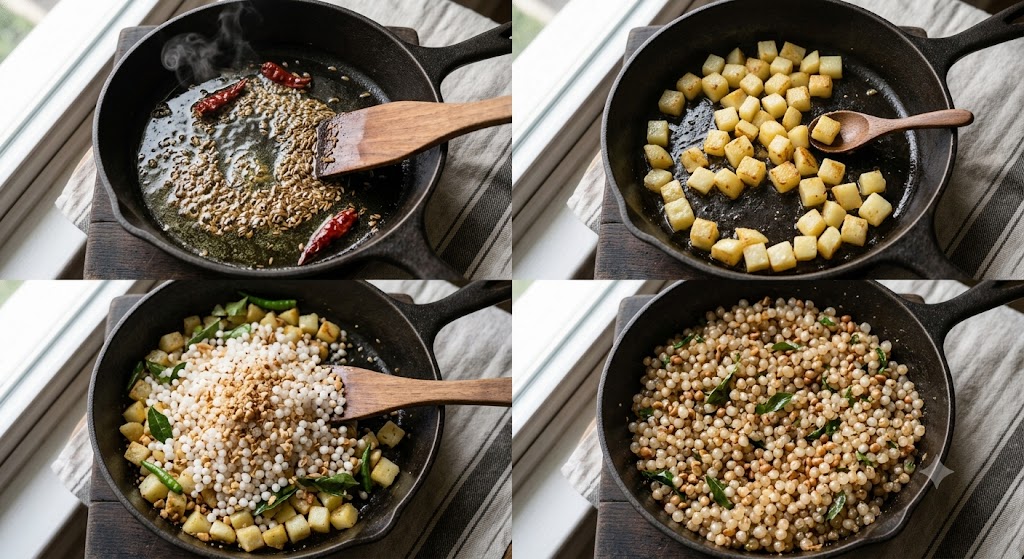
Potato goes into the tempering before the sabudana does, not after. Boil it ahead of time, cube it, and let it sauté briefly in the ghee with the cumin and chilies until it picks up a little color. Adding it early like this means it holds its shape instead of turning mushy, and it doesn’t compete with the sabudana for cooking time once the pearls go in.
How to cook it without it turning into a lump
Once the pearls, peanut powder, and seasoning are combined, add everything to the hot tempering and toss gently with a fork rather than stirring hard with a spoon. You’re coating and folding, not mashing. Keep the heat at medium-low, and resist the urge to keep cooking “just a little longer” once the pearls look glossy. If a batch starts clumping while it’s still in the pan, that’s your cue to turn the heat down and stop working it, more stirring at that point makes it worse, not better.
If you’re planning your full fasting-day spread, this sits well alongside something like Ukadiche Modak, another dish that lives or dies on getting the water ratio right before you ever turn on the stove.
Sabudana Khichdi Recipe: Ingredients
This sabudana khichdi recipe serves 3 to 4.
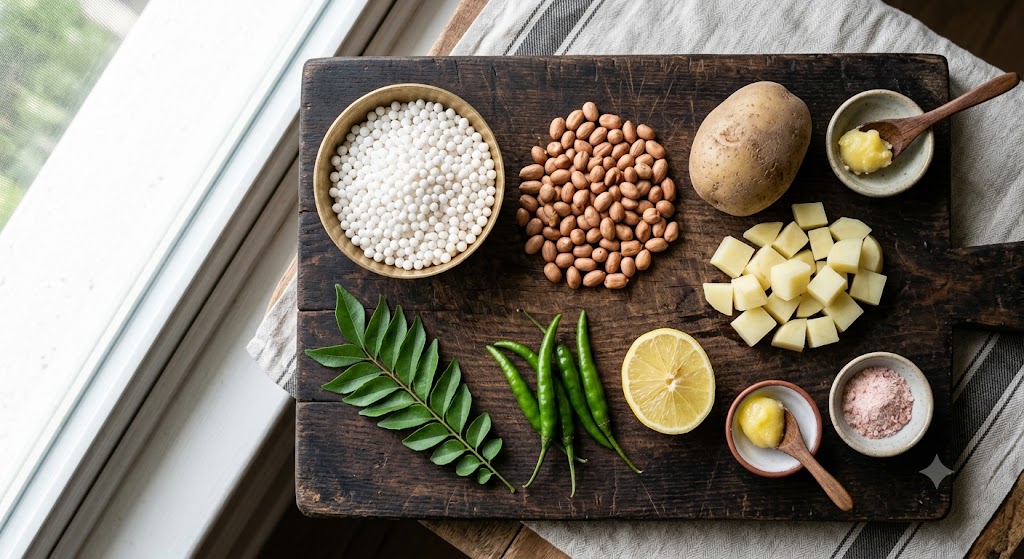
- Sabudana (sago pearls) — 1 cup (about 180 to 200 g)
- Water for soaking — ¾ cup, or enough to sit 1 to 1.5 inches above the pearls
- Raw peanuts — ½ cup, dry-roasted, skins removed, coarsely crushed
- Potato — 1 medium, boiled and cubed
- Ghee — 2 to 3 tablespoons (use oil for a stricter or vegan version)
- Cumin seeds — 1 teaspoon
- Green chilies — 2 to 3, finely chopped or slit
- Curry leaves — 8 to 10 (optional, some households skip these on fasting days)
- Sugar — 1 to 2 teaspoons
- Lemon juice — 1 to 2 teaspoons, added at the very end
- Rock salt (sendha namak) for a vrat version, or regular salt otherwise — to taste
- Fresh coriander leaves — 2 tablespoons, chopped, for garnish
- Fresh grated coconut — 1 to 2 tablespoons, optional garnish
[If your tested batch uses different quantities, especially the water ratio, which genuinely varies by sabudana brand, swap in your own numbers here. The ¾ cup ratio is a reliable default, not a hard rule.]
How to Soak Sabudana Properly
- Rinse the sabudana two to three times under running water until it runs clear.
- Add ¾ cup water per cup of sabudana (or enough to sit 1 to 1.5 inches above), cover, and let it rest at room temperature for 4 to 6 hours, or overnight if your pearls need it.
- Press-test a few pearls. They should mash completely with no hard center.
- Drain thoroughly. There shouldn’t be any real standing water left, if there is, your soak had too much water to begin with.
How to Cook This Sabudana Khichdi Recipe
- Fold the coarsely crushed roasted peanuts into the drained sabudana, along with the salt and sugar. Fluff gently with a fork so the pearls stay loose.
- Heat ghee in a wide pan on medium heat. Add cumin seeds and let them crackle.
- Add the green chilies and curry leaves, if using, and sauté a few seconds.
- Add the cubed boiled potato and sauté for 1 to 2 minutes until lightly golden.
- Lower the heat to medium-low, add the peanut-coated sabudana, and toss gently to coat everything evenly. Don’t mash or stir hard.
- Cook for 3 to 5 minutes, tossing occasionally, until the pearls turn glossy and translucent. Stop as soon as they do.
- Turn off the heat. Stir in the lemon juice and coriander, and coconut if using.
- Rest covered for a minute or two, then serve hot.
Vrat (Fasting) Version of This Sabudana Khichdi Recipe vs. Everyday Version
The traditional fasting-day version sticks to ingredients allowed during upvas: sendha namak instead of regular salt, and no onion or garlic. Ghee, cumin, green chilies, peanuts, potato, sugar, and lemon are all fine for fasting. The everyday, non-fasting version many households make on regular days often adds a bit of chopped onion sautéed in with the potato, along with regular table salt. The soaking and cooking technique stays exactly the same either way, only the seasoning changes.
How to Store and Reheat Sabudana Khichdi
This dish is genuinely best eaten fresh and hot, the texture is never quite the same once it’s been sitting. If you do have leftovers, keep them in an airtight container in the fridge for up to 2 days. The pearls will firm up as they chill, that’s normal. Reheat gently, either in a pan on low heat with a small spoon of ghee, tossing gently, or in the microwave with a light sprinkle of water. Avoid freezing it, the texture turns rubbery and doesn’t recover.
Frequently Asked Questions
Questions that come up most often about this sabudana khichdi recipe:
Almost always too much soaking water, not enough rinsing beforehand, or overcooking in the pan. Fix the soak first, that’s where most sticky batches actually go wrong.
About ¾ cup of water per 1 cup of sabudana, or just enough to sit 1 to 1.5 inches above the pearls. More than that and you’re likely to end up with sticky khichdi.
Usually 4 to 6 hours at room temperature, though this depends on your specific pearls, some need less, some need overnight. Use the press test rather than a fixed timer.
You can, but the texture and flavor won’t be quite the same, the peanuts do real work keeping the pearls from sticking together, not just adding crunch. If you need a peanut-free version for allergies, roasted, coarsely crushed makhana (fox nuts) is a reasonable substitute.
It’s a fairly calorie-dense dish because of the ghee, peanuts, and starchy sabudana and potato, so it’s not particularly a weight-loss food, though it is filling and easy to digest, which is part of why it’s traditionally eaten on fasting days.
Yes, oil works fine if you’re avoiding ghee, though you’ll lose some of the traditional flavor.
Nutrition Information
Approximate values per serving of this sabudana khichdi recipe (based on a batch serving 3 to 4, made with ghee, peanuts, and potato):
- Calories: about 250 to 400 kcal
- Carbohydrates: about 40 to 55 g
- Protein: about 5 to 8 g
- Fat: about 10 to 20 g
These are calculated estimates based on standard nutrition values for sabudana, peanuts, potato, and ghee, not a lab analysis of your specific batch, and they’ll shift depending on how much ghee and peanuts you use. Frame it as “approximate, calculated from ingredients” if this goes into a site nutrition field, that’s accurate and keeps you covered if a reader’s numbers come out slightly different.
If there’s one thing to take from all of this, it’s that sabudana khichdi rewards patience at the soaking stage far more than skill at the stove. Rinse well, soak light, check before you cook, and the pan work practically takes care of itself.
Made this? I’d love to see it. Tag @originalsugrankitchen on Instagram, and if you’re building out your fasting-day spread, check the Sugran Kitchen recipes page for more, Ukadiche Modak is already up if you haven’t tried that one yet.
More Kitchen Stories
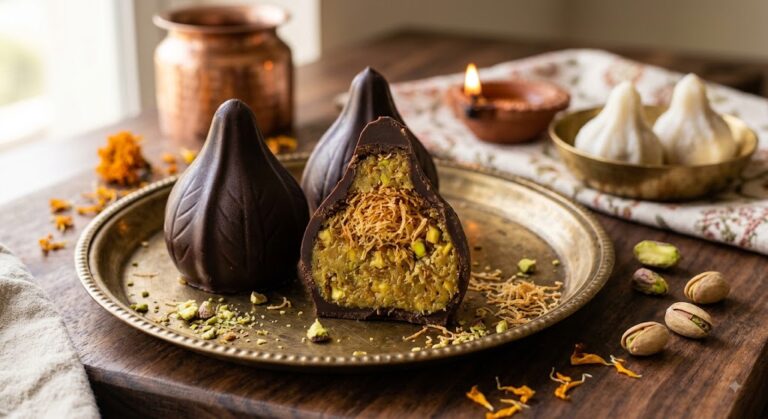
Dubai Chocolate Modak Recipe: The Viral Pistachio Kunafa Twist on a Ganpati Classic
There’s a version of this recipe that would make my grandmother raise an eyebrow, and I…

Ukadiche Modak Recipe – Authentic Maharashtrian Steamed Modak
There’s a sound in every Maharashtrian kitchen right before Ganesh Chaturthi, and it’s not the aarti…
No Comments Yet
Be the first to share your thoughts!